Recent projects
A selection of projects where AutomationBuzz delivered engineering, programming and safety expertise.
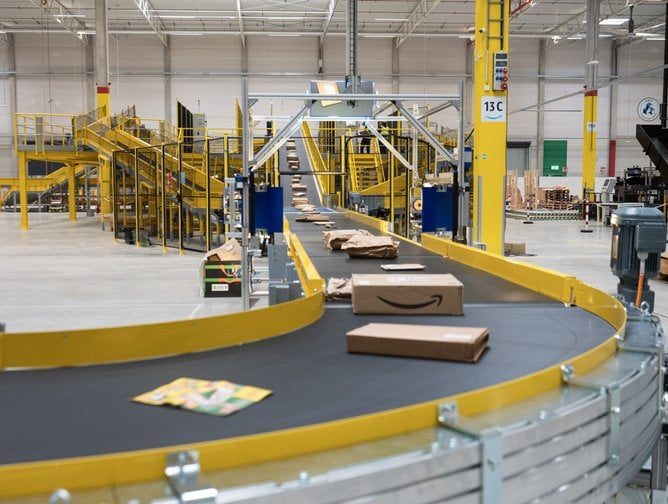
Codesys OOP library rework — Amazon Innovation Center Dortmund
At the Amazon Innovation Center in Dortmund, Germany — supporting Amazon's internal automation team in reworking parts of their existing Codesys library towards object-oriented programming, helping make machine software faster to build, easier to test and simpler to maintain.
Technical details
The machine: Amazon's internal Codesys library used across automation projects: working alongside the internal team, legacy function blocks were reworked into an object-oriented structure (interfaces, inheritance, methods and properties in Codesys 3.5), with reusable components, design patterns and abstraction layers for drives, sensors and actuators.
Purpose: A more consistent, well-documented library that shortens development time, reduces bugs and makes machine software scalable across teams and projects.
Key technologies:
- Codesys 3.5 — OOP: interfaces, inheritance, methods & properties
- SOLID design principles
- Design patterns & hardware-abstraction layers
- Virtual Codesys deployment on Linux
Machine safety engineering — wind tunnel facility
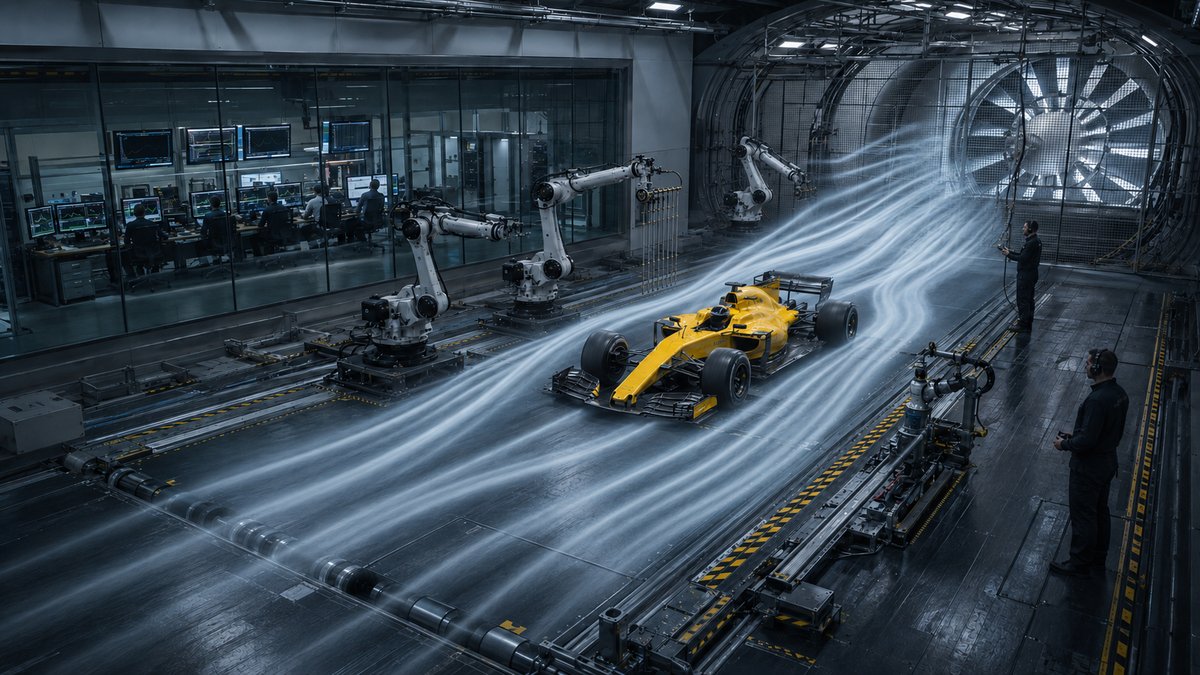
Contracted by a tier-1 supplier to the company building a new wind tunnel facility — functional safety engineer in the project's safety team, working on the machine-safety engineering of the installation.
Technical details
The machine: Definition and documentation of safety functions across the facility — emergency stops, interlocked door systems, operation modes and large rotating machinery — including PL determination and verification per ISO 13849, the facility safety register and the safety-PLC architecture (Beckhoff TwinCAT Safety).
Purpose: A clear safety dossier per safety function, aligned in weekly safety meetings with the client and the equipment vendors.
Key technologies:
- Risk assessment per ISO 12100
- PL calculations per ISO 13849 (SISTEMA)
- Beckhoff TwinCAT Safety architecture
- Multi-vendor safety interface reviews
Bridge control systems for luxury superyachts
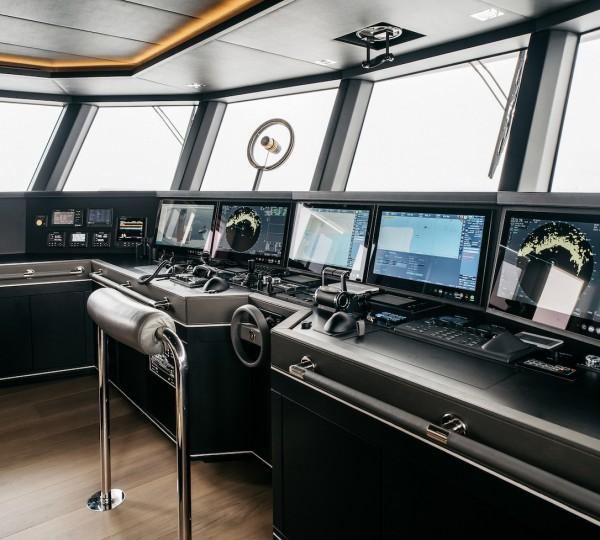
For Radio Zeeland DMP — lead PLC software engineer for complete bridge control and monitoring systems for 40–100 m luxury yachts, including the superyacht M5. Two complete systems delivered.
Technical details
The machine: One main safety-rated PLC coordinating subsystem controllers for propulsion, steering, stabilizer fins, bow/stern thrusters, sails, generators, tanks, alarms and lighted button panels — linked to radar/ECDIS and a FLIR thermal camera. User interfaces and diagnostic tools developed in C#/.NET.
Purpose: Give the captain and crew one clear place to see and control all key yacht systems, manage alarms and switch between modes, working seamlessly with the navigation gear.
Key technologies:
- Codesys 3.5 (Structured Text)
- Marine network & fieldbus interfaces
- Visual Studio C#/.NET HMI applications
- Git & Bitbucket version control
Safety systems for Hoeflon compact cranes
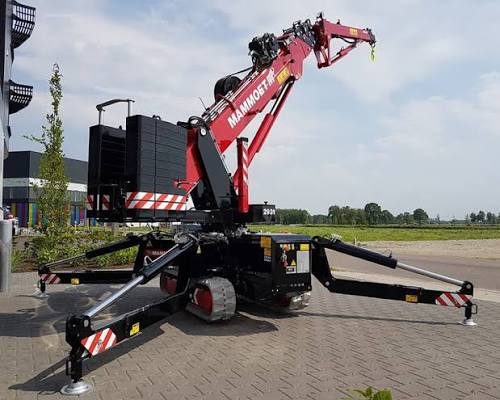
For Baulds B.V. — industrial safety and safe-PLC specialist on a compact crane project built on IFM safety controllers. Reworked the legacy safety and standard software so Baulds' sensors, actuators and control pendant integrate correctly into Hoeflon cranes, bringing the system in line with machinery safety standards (SIL2).
Technical details
Key technologies:
- IFM mobile safetyPLC
- SIL2 safety logic design & validation
- Legacy safety-protocol rework and integration
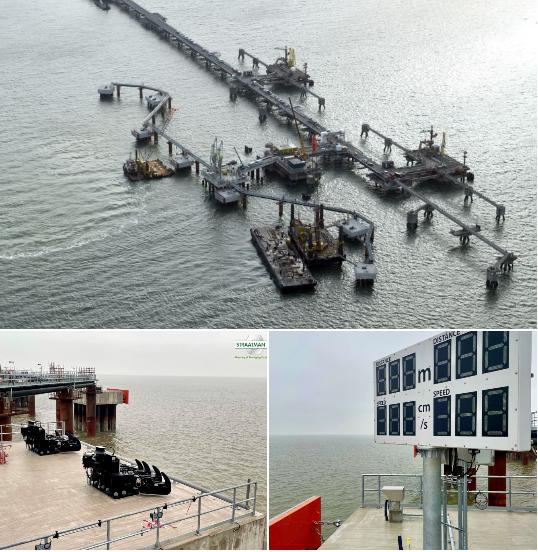
Mooring systems with berthing aid system — Wilhelmshaven
For Straatman B.V., at Germany's first FSRU-based LNG terminal (Wilhelmshaven) — project lead for software & control hardware and team lead of the PLC/SCADA department, from concept to final delivery. The fully operational system was delivered in just two months during the 2022 energy crisis.
Technical details
The machine: Eight groups of quick-release mooring hooks combined with a berthing aid system (BAS): two long-distance lasers measure the distance, speed and approach angle of tankers being tugged to the jetty, displayed on a large screen readable from far away. Environmental sensors add wind, visibility, tide height and water-current data.
Purpose: Quick-release hooks for LNG terminals, with the BAS guiding LNG tankers safely to the jetty.
Key technologies:
- Codesys 3.5 (Structured Text)
- Industrial network & fieldbus communication
- JMobile SCADA + HMI development
- Git & Bitbucket version control
References: Straatman — berthing aid systems ↗ · LinkedIn project post ↗
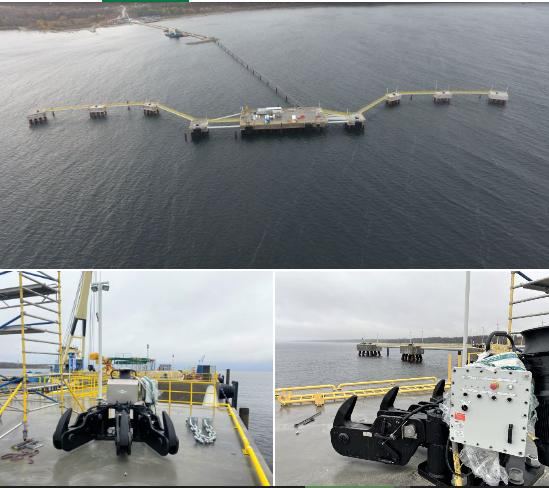
Mooring equipment for LNG terminal Paldiski
For Straatman B.V., at the LNG terminal in Paldiski, Estonia — Lead PLC software engineer from initial concept and research to development, testing and final delivery.
Technical details
The machine: Eight hook groups of 3–4 quick-release hooks, each with its own release mechanism and separate load-measurement sensors. Every group runs on a standalone PLC, coordinated by one main PLC with HMI in the control room.
Purpose: Mooring large LNG-transporting ships safely at the terminal.
Key technologies:
- Codesys 3.5 (Structured Text)
- Industrial network & fieldbus communication
- JMobile SCADA + HMI development
- Git & Bitbucket version control
References: Straatman — quick release mooring hooks ↗ · LinkedIn project post ↗
Shipping container AGVs — Port of Rotterdam
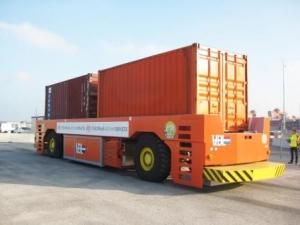
At VDL Automated Vehicles, for ECT (Port of Rotterdam) — Lead PLC & safety software engineer. The first prototype was designed, produced and installed at the customer by Boban, with an order of 77 vehicles to follow.
Technical details
The machine: 30-tonne autonomous vehicles carrying 70–140 t shipping containers across the Rotterdam port, positioning in real time via radio transponders in the ground and advanced control logic.
Purpose: Cranes place containers from ships onto a free AGV; the vehicle receives its destination from the port operating software, calculates its route and navigates around the rest of the fleet to deliver the container.
Key technologies:
- Codesys 3.5 (Structured Text)
- CAN-based vehicle communication
- SIL2 functional safety
- Danfoss Editron drives & motors
- Matlab + Simulink vehicle-model testing
References: VDL — order for 77 AGVs ↗ · Video of the AGV ↗
Mixed-traffic AGV for BASF
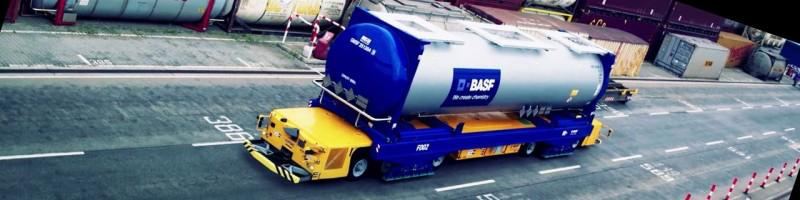
At VDL Automated Vehicles, for BASF Germany — Lead safety software engineer for an autonomous vehicle that transports hazardous chemical vessels through a large industrial complex.
Technical details
The machine: Drives in mixed traffic alongside manned vehicles, where safety is the highest priority. Positioning via Lidar sensors and road transponders, with cameras for precise positioning when parking.
Purpose: Fully autonomous, safe transport of hazardous chemical vessels across the BASF site.
Key technologies:
- Siemens TIA Portal (Structured Text)
- Siemens safety programming
- ISO 26262-oriented safety development
References: Video of the BASF AGV ↗
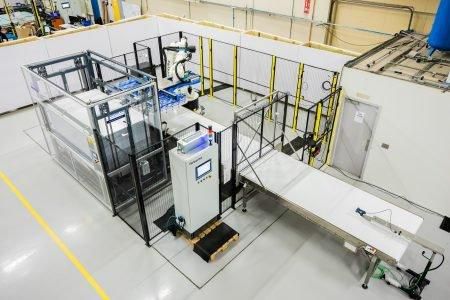
Automated composite kitting cell
At Airborne B.V. (The Hague) — robotics, controls and automation engineer. Two machines of this type were designed, produced and installed at the customer.
Technical details
The machine: A sorting cell that scans arbitrarily shaped composite plies with machine vision to determine size, position and ID, buffers them with a KUKA robot, and re-sorts them into the exact kit order requested by the operator.
Purpose: Building specific ply-shape combinations from plies inserted in random order — automating kitting for aerospace composite production.
Key technologies:
- KUKA WorkVisual robot programming
- Siemens Step7 + WinCC (Structured Text)
- Machine vision & robot integration
- GitLab version control
References: Video of the kitting cell ↗
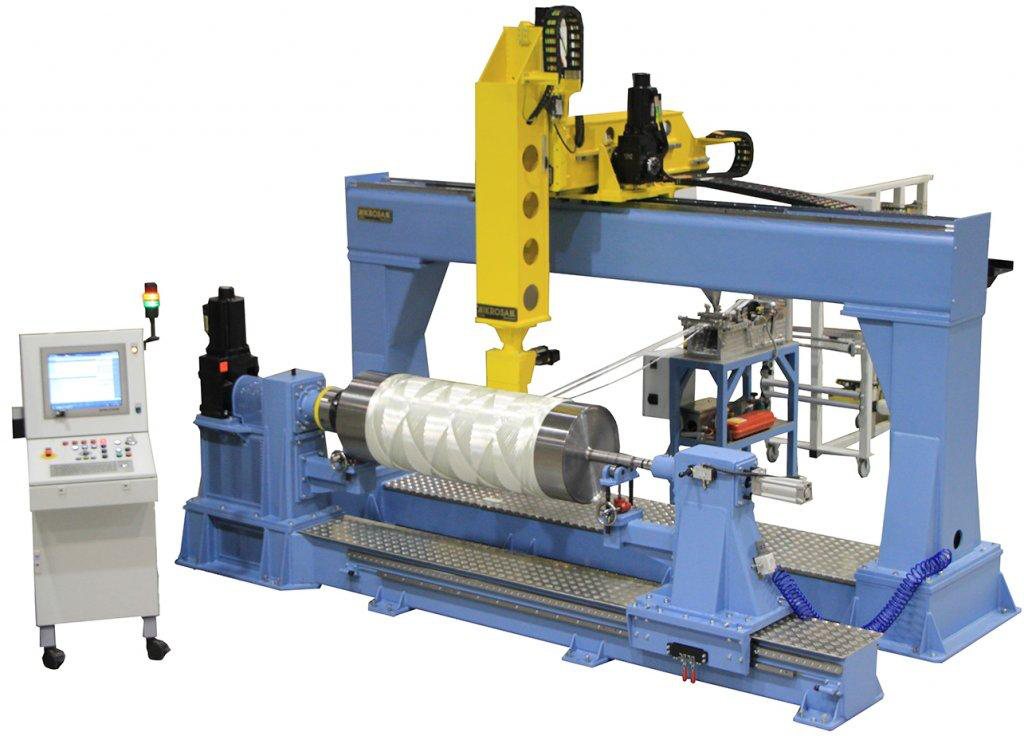
Filament-winding CNC machines — MAW 20 MS4/2
At Mikrosam AD — product owner, controls & automation engineer and electrical engineer. Six machines of this type were designed, produced and installed at customers worldwide.
Technical details
The machine: A 5-axis CNC gantry machine with a fixed spindle axis rotating a mandrel. Continuous fibers — pre-impregnated or impregnated during winding — are wound onto the rotating mandrel in a precise, predetermined pattern.
Purpose: Fabricating composite pipes and pressure vessels from continuous fiber.
Key technologies:
- Beckhoff TwinCAT 3 (Structured Text)
- Beckhoff CNC — G-code machining programs
- Lenze servo drives & motors
- EPLAN P8 electrical design
References: Mikrosam — filament winding MAW 20 ↗
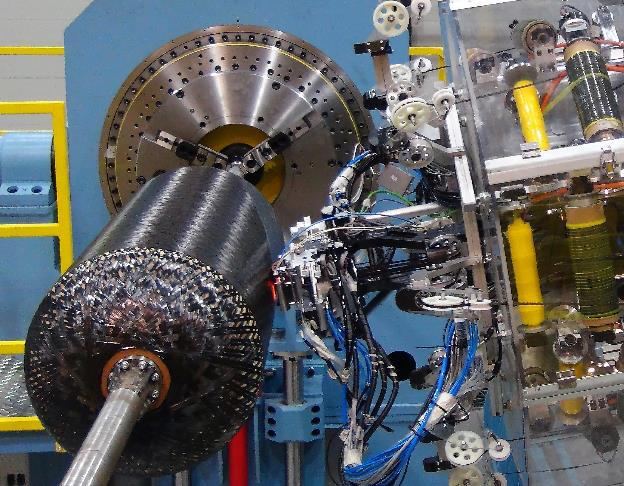
6-axis AFP + filament-winding gantry for rocket fuselages
At Mikrosam AD — product owner, R&D engineer and controls & automation engineer. One machine of this type was designed, produced and installed at the customer.
Technical details
The machine: A combined 6-axis AFP and 5-axis filament-winding CNC floor gantry with a fixed spindle axis rotating a mandrel; the AFP head lays eight separate fiber-tow tracks.
Purpose: Winding and laminating big heavy-duty high-pressure cylinders used for rocket fuselages, with highly contoured composite structures.
Key technologies:
- Beckhoff TwinCAT 3 (Structured Text)
- Beckhoff CNC — G-code machining programs
- Lenze servo drives & motors
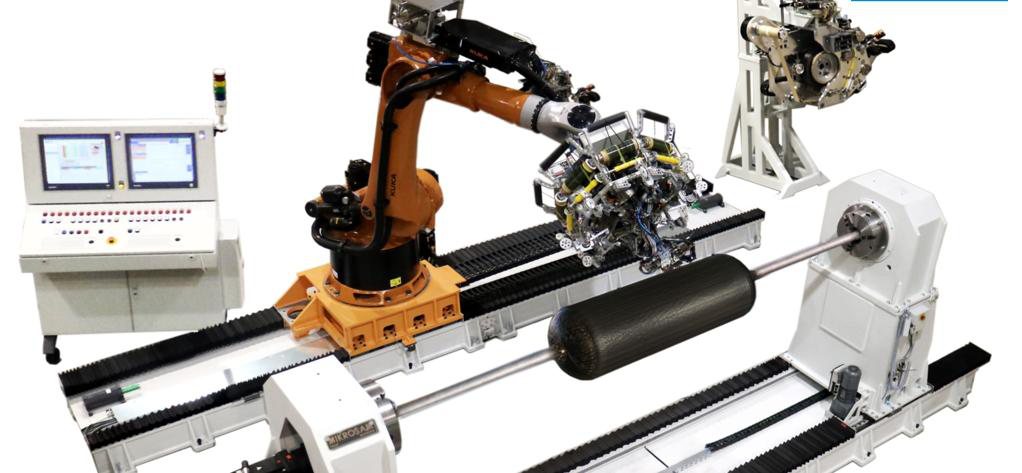
Robot AFP/ATL lamination cells
At Mikrosam AD — product owner, R&D engineer, robotics engineer and controls & automation engineer. Two machines of this type were designed, produced and installed at customers.
Technical details
The machine: Interchangeable ATL and AFP tools on a 6-axis KUKA robot, combined with a fixed spindle axis that rotates a mandrel or holds a flat surface.
Purpose: Laminating big high-pressure cylinders or flat laminates with highly contoured composite structures.
Key technologies:
- KUKA WorkVisual robot configuration
- KUKA CNC — G-code-driven robot motion
- Beckhoff TwinCAT 3 (Structured Text)
- Lenze servo drives & motors
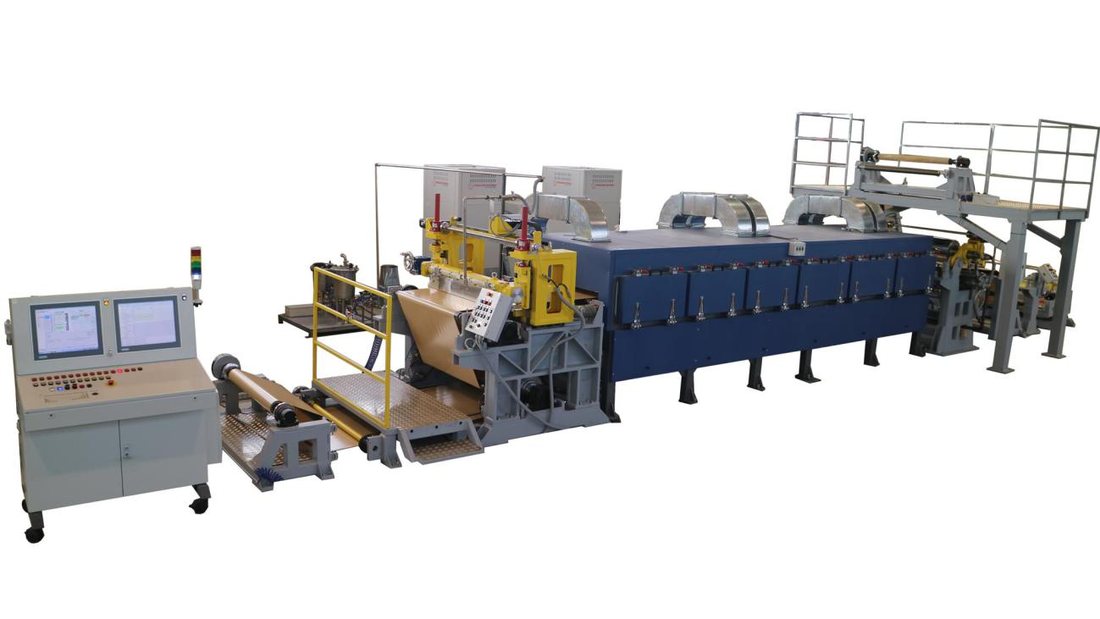
Horizontal aramid impregnation line — MCI 200-1000
At Mikrosam AD — product owner, R&D engineer, controls & automation engineer and electrical engineer. One machine of this type was designed, produced and installed at the customer.
Technical details
The machine: A production line that applies a hardening agent onto silicon paper, heat-activates it and transfers it onto clean aramid fabric through compression — after which the finished aramid material is wound onto the end spool.
Purpose: Producing rolls of binder-reinforced aramid fabric used for bulletproof vests and helmets.
Key technologies:
- Beckhoff TwinCAT 3 (Structured Text)
- Heating & tension control systems
- Lenze servo drives & motors
- EPLAN P8 electrical design
Prepreg slitting & tow-rewinding cells — MSR-300D
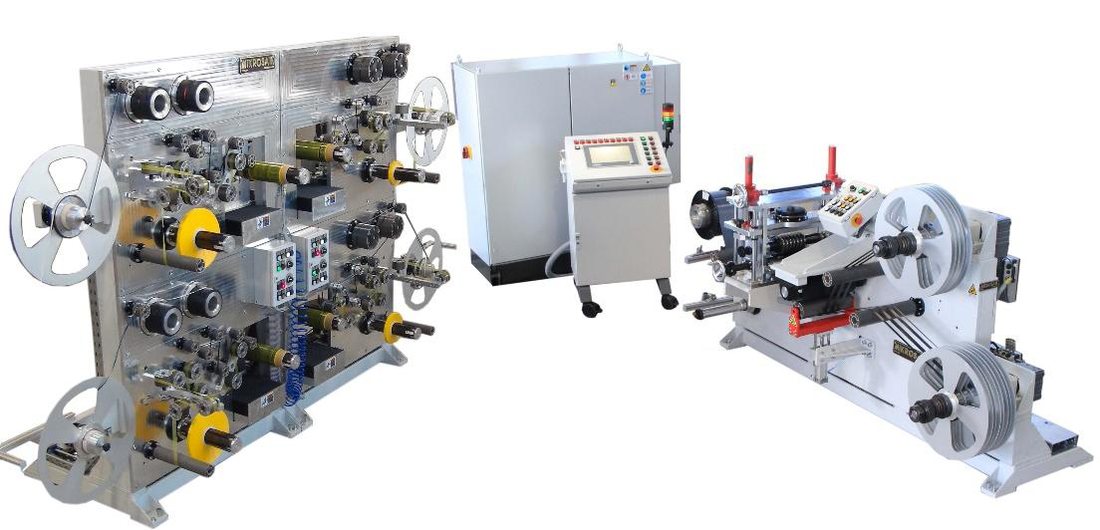
At Mikrosam AD — product owner, R&D engineer, controls & automation engineer and electrical engineer. Three machines of this type were designed, produced and installed at customers.
Technical details
The machine: A production line that unwinds a wide spool of unidirectional carbon-fiber composite and slits it into single tows, which are rewound into cassettes.
Purpose: Cutting composite rolls (carbon fiber + resin) into single-tow cassettes, later rewound onto spools for use in AFP machines.
Key technologies:
- Beckhoff TwinCAT 3 (Structured Text)
- Tension-control systems
- Lenze servo drives & motors
- EPLAN P8 electrical design
References: Mikrosam — slitting cell MSR-300D ↗
Photos: AutomationBuzz project archive; illustrative images courtesy of their respective owners (Amazon, Hoeflon, Mikrosam).
Ready to automate with confidence?
Tell us about your machine, line or safety challenge — we'll tell you honestly how we can help.
Get in touch